

In this topic
- Air movers and dehumidifiers work as a pair.
- Meters and thermal cameras decide where equipment goes.
- Specialty systems can dry hardwood, walls and cabinets in place.
Household fans and a small dehumidifier can't dry soaked building materials. Commercial equipment moves much more air and removes much more water, and the readings show whether it is working.
This topic is part of our complete guide to water damage restoration. The articles for this topic are listed at the end of the page.
The equipment on a typical job
- Extraction equipment to remove standing water.
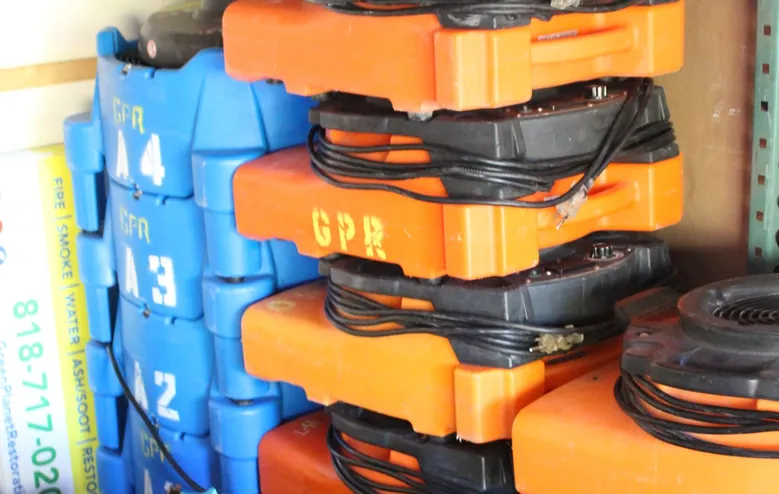
- Air movers to pull moisture out of materials.
- Dehumidifiers to take it out of the air.
- Moisture meters and thermal cameras to find and track water.
- Specialty drying for hardwood, walls and cabinets.
- HEPA air scrubbers when mold or contamination is involved.
Living with the equipment
It is loud and it makes rooms warm. Both are normal. Keep doors and windows as the crew set them, leave equipment running and call your project lead if something needs to move. The full list is in our equipment glossary.
All 16 articles in this topic
0 published · 16 coming soon- What Is Specialty Drying for Hardwood Floors?Coming soon
- How Do You Dry Water Damage Trapped Behind Drywall?Coming soon
- What Is a Drying Chamber and When Is It Used?Coming soon
- How Does Desiccant Dehumidification Differ From LGR?Coming soon
- What Causes Cupping or Buckling in Hardwood Floors?Coming soon
- How Do You Dry Out Insulation After Water Damage?Coming soon
- What Equipment Is Used to Dry Ceiling Cavities?Coming soon
- How Do Restorers Handle Drying in High Humidity Climates?Coming soon
- What Is the Difference Between Drying and Dehumidifying?Coming soon
- How Do You Prevent Secondary Damage During the Drying Process?Coming soon
- What Causes Warped Baseboards After Water Damage?Coming soon
- How Is Water Removed From Between Tile and Subfloor?Coming soon
- What Equipment Detects Moisture Inside Walls Without Damage?Coming soon
- How Do Restoration Companies Dry Commercial Warehouses?Coming soon
- What Causes Drying Equipment to Run Longer Than Expected?Coming soon
- What Project Management Tools Do Restoration Companies Use to Track Multi-Day Drying Jobs?Coming soon
Need a structure dried properly?
A local crew can be on site in about 45 minutes, 24/7, and we document everything for your insurer.