Inspection tools
Thermal imaging cameras
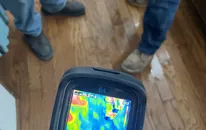
Wet materials are usually cooler than dry ones. A thermal camera shows those temperature differences, which helps us see where water has spread behind walls and ceilings without opening them.
- Sees temperature
differences - Fewer holes
in your walls - Confirmed with
moisture meters
- IICRCCertified firm
- CSLBLicensed contractor
- Bonded& insured
- InsuranceDirect billing
- 24/7/365Emergency dispatch
- TrustpilotRead our reviews
What thermal imaging cameras do on a job
As water evaporates from a surface it cools it, so damp drywall usually shows up cooler than the dry wall next to it. A thermal camera turns those small temperature differences into an image, which makes the pattern of a leak much easier to follow.
A thermal camera does not see water directly. Cold air from a vent, missing insulation or a window can look similar. That is why every cool spot we find is checked with a moisture meter before we decide anything.
Types we use
| Use | What it helps with | What we look for | Confirmed by |
|---|---|---|---|
| Initial inspection | Finding the spread | Cool patterns running from the source across walls, ceilings and floors. | Pin and pinless meters |
| Ceilings and roofs | Leaks from above | Cool patches around fixtures, joints and the edges of the ceiling. | Meter readings, attic check |
| Behind cabinets and tile | Hidden plumbing leaks | Patterns that point to a supply line or drain. | Meters, plumber's findings |
| During drying | Tracking progress | Cool areas shrinking day by day. | Daily moisture log |
How we use them on your job
Scan the rooms
We scan walls, ceilings and floors around the source and beyond it.
Check every cool spot
Each suspicious area is confirmed or ruled out with a moisture meter.
Photograph the findings
Thermal and regular photos go into the job file for your adjuster.
Open only what is needed
Knowing where the water is means less demolition.
Re-scan during drying
Scans help confirm the drying is reaching everywhere it needs to.
Common questions
Can a thermal camera see through walls?
No. It reads the surface temperature of the wall. Water inside the wall often changes that temperature enough to show up.
Can it find mold?
Not directly. It can find the moisture that lets mold grow. Mold is confirmed by inspection and, when needed, testing.
Does it reduce demolition?
Usually. Knowing exactly where the water went means we open only the areas that need it.
Are the images included in my claim file?
Yes. Thermal images and matching photos go into the documentation we give your adjuster.
The rest of the kit