Drying equipment
Dehumidifiers
Air movers pull water out of wet materials and into the air. Dehumidifiers pull it out of the air and send it down a drain. Without them, the moisture just settles back into the walls.
- Removes water
from the air - Checked with
daily readings - Stops mold
before it starts

- IICRCCertified firm
- CSLBLicensed contractor
- Bonded& insured
- InsuranceDirect billing
- 24/7/365Emergency dispatch
- TrustpilotRead our reviews
What a dehumidifier does on a water job
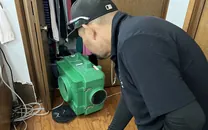
After the standing water is extracted, a lot of water is still inside the house: in the drywall, the subfloor, the cabinets and the air. As air movers dry those materials, the water turns into humidity. A commercial dehumidifier pulls that humidity out and drains it away, often several times more water per day than a household unit can manage.
Getting the air dry is what lets the materials keep drying. If the air stays humid, wet drywall and wood stop giving up their moisture and mold has time to start.
Types we use
| Type | Best for | How it works | Typical setting |
|---|---|---|---|
| LGR (low grain refrigerant) | Most water damage jobs | Pulls air over very cold coils so water condenses, then pumps it out. Keeps working as the air gets drier, which household units can't. | Warm, enclosed rooms |
| Desiccant | Cold spaces, hardwood, very dry targets | Uses a moisture-absorbing wheel instead of coils. Works in cold crawl spaces and can dry the air further than an LGR unit. | Crawl spaces, basements, winter jobs |
| Conventional refrigerant | Maintenance, small areas | Similar to a large household unit. Loses effectiveness as humidity drops, so we rarely use them for structural drying. | Light moisture only |
How we use them on your job
Measure first
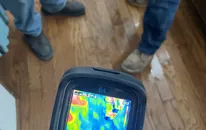
We take moisture readings in walls, floors and cabinets and record the temperature and humidity in each room.
Set up a drying chamber
Wet rooms are closed off with doors or plastic so the dehumidifier isn't trying to dry the whole house.
Pair with air movers
Air movers lift water out of the materials, the dehumidifier removes it from the air. One without the other is slow.
Check every day
A technician takes new readings daily, empties or checks the drain line and adds or removes units as things dry.
Remove at dry standard
Equipment comes out when readings match unaffected areas of the house, and the log goes to your adjuster.
Common questions
How long will the dehumidifiers stay?
Most homes dry in three to five days. Dense materials like hardwood and concrete can take longer. We decide from the daily readings, not the calendar.
Will they raise my electric bill?
Yes, somewhat. The drying log records how many units ran and for how many days, which your adjuster can use if your policy covers the added electricity.
Why is the room so warm?
Dehumidifiers give off heat, and warm air helps materials release moisture. It's normal, and it means the drying is working.
Can I use my own dehumidifier instead?
A household unit helps with a damp room, but it isn't built to dry soaked building materials, and it slows down as the air dries. For real water damage you need commercial units and moisture readings.
The rest of the kit