Drying equipment
Air movers
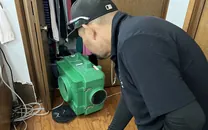
Air movers blow a fast, low stream of air across wet floors, walls and cabinets. That airflow pulls water out of the materials and into the air, where dehumidifiers can remove it.
- Moves moisture
out of materials - Placed by
moisture readings - Dries before
mold can start
- IICRCCertified firm
- CSLBLicensed contractor
- Bonded& insured
- InsuranceDirect billing
- 24/7/365Emergency dispatch
- TrustpilotRead our reviews
What air movers do on a job
Wet drywall, carpet and wood give up moisture slowly on their own. An air mover speeds that up by sweeping dry air across the surface, breaking up the damp layer of air that sits against wet materials.
Air movers never work alone. They turn water in the materials into humidity, so a dehumidifier has to run alongside them. Without one, the room just gets muggier and the drying stalls.
Types we use
| Type | Best for | How it works | Typical setting |
|---|---|---|---|
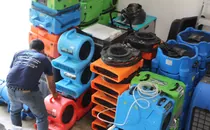
| Low-profile (snail) air mover | Floors, carpet, walls | Blows a flat, fast stream of air along the floor and up the wall. The most common unit on any water job. | Most rooms |
| Axial air mover | Large open areas | Moves a big volume of air in a wider pattern. Good for open-plan spaces and commercial floors. | Warehouses, big rooms |
| Wall cavity and injection setups | Inside walls and cabinets | Air is pushed through small holes or hoses into wall cavities and under cabinets, so they dry without full demolition. | Kitchens, bathrooms |
How we use them on your job
Map the wet areas
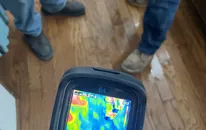
Moisture readings show exactly where the water went, which decides how many air movers go where.
Aim along the walls
Units are set every few feet, angled along the base of wet walls so the air sweeps the whole surface.
Lift carpet if needed
For wet carpet we may float it on air, blowing underneath to dry the pad and subfloor together.
Adjust every day
As areas dry, units are moved to the spots that are still wet or taken away.
Remove at dry standard
Equipment comes out when readings match unaffected areas, and the drying log goes to your adjuster.
Common questions
How long do air movers need to run?
Most homes dry in three to five days. We decide when to remove them from daily moisture readings, not from how the room feels.
Why are they so loud?
They move a lot of air fast, and that is what does the drying. We can space them differently at night if noise is a real problem, but turning them off slows everything down.
Can I plug them into any outlet?
Leave that to the crew. We spread the load across circuits so breakers don't trip, and we check the setup on every visit.
Can I use a box fan instead?
A box fan moves air in the wrong direction and not fast enough to dry soaked materials. It can help a little with a damp room, but not with real water damage.
The rest of the kit