
Dry smoke
Dry smoke
From: fast, hot fires burning paper and wood.
Fine powdery residue that drifts into gaps and ductwork.
HEPA vacuuming, dry chemical sponges
Advanced smoke removal for homes and businesses
Smoke odor lingers long after the fire is out, and it is not just a smell. It is soot and chemical residue in your walls, ducts and belongings. We remove the residue, clean the HVAC and neutralize what is left at the molecular level.

Local crews across Southern California, Florida, Washington and Nevada
Smoke odor removal
The smell is the residue talking. Soot particles cling to walls, ceilings, carpet, upholstery and the inside of your ductwork, and they keep releasing odor until they are removed. Every time the HVAC runs, it spreads them again.
We follow IICRC standards and California Air Resources Board (CARB) guidance, and we use HEPA air scrubbers, thermal foggers, hydroxyl and ozone generators to get the property back to clean, breathable air.
Household cleaners push soot deeper into drywall and wood grain and can lock the stain and smell in.
Tell us what happened. We'll take it from here.
Recent fire? Call (800) 719-4808 for the fastest dispatch.
Your information is secure and never shared.
 AI job photo
Lingering smoke hazards
Soot is acidic. Left alone, it keeps damaging the property and the people living in it.
Call for a Free InspectionTypes of smoke damage
What burned and how hot it burned decide what the residue looks like and how hard it is to remove. We identify the type on the first walkthrough and choose detergents to match.
From: fast, hot fires burning paper and wood.
Fine powdery residue that drifts into gaps and ductwork.
HEPA vacuuming, dry chemical sponges
From: slow, smoldering, low-heat fires (plastics, rubber).
Sticky, greasy film that smears when wiped.
Heavy degreasers, extensive scrubbing
From: kitchen fires, burned food.
Nearly invisible residue with an intense, foul odor.
Enzyme cleaners, thermal fogging
From: petroleum fires, furnace puff-backs.
Heavy, chemical-smelling residue that stains.
Specialty solvents, sealants
From: vegetation and building materials outdoors.
Fine particles and gases that come in through vents and gaps.
HVAC cleaning, air scrubbing, hydroxyl
From: long-term indoor smoking.
Nicotine film on walls, ceilings, carpet and ducts.
Surface washing, sealing, deodorizing
Smoke odor removal process
Walls, ceilings, carpets, upholstery, HVAC and personal belongings all go through the same sequence.
We inspect the property to identify every smoke-affected area.
Affected areas are isolated so particles do not move into clean rooms.
Thermal fogging, ozone treatment and HEPA filtration on every surface.
Hydroxyl generators and activated carbon filters neutralize remaining odor.
We confirm the property is odor-free and restored.
Soot and ash cleanup
Soot and ash cleanup is methodical. Skip a step and the residue keeps releasing odor.
 Featured video
Featured video
Smoke residue settles into walls, ducts and fabrics and keeps smelling for months. This video explains what it takes to remove it properly.
Now showing: Smoke Damage and Restoration
Case studies
Real jobs, start to finish: what we found, what we did and how it turned out.
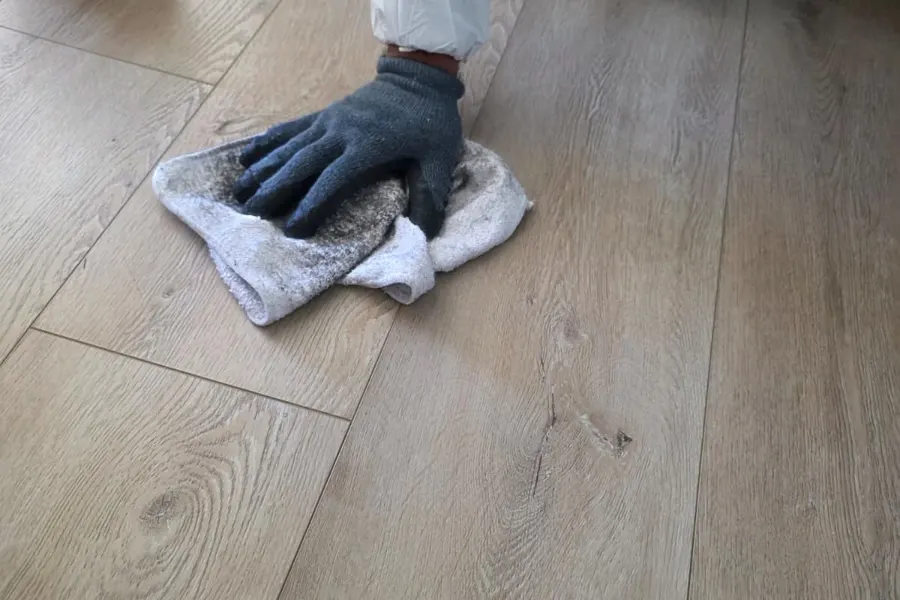
Sample scenario
The fire was small but the whole house smelled. We cleaned every surface, replaced filters and ran thermal fogging before the family moved back.
 AI job photo
Sample scenario · Southern California
Ash came in through vents and gaps while the owners were evacuated. We HEPA vacuumed, cleaned the ducts and treated the soft goods.
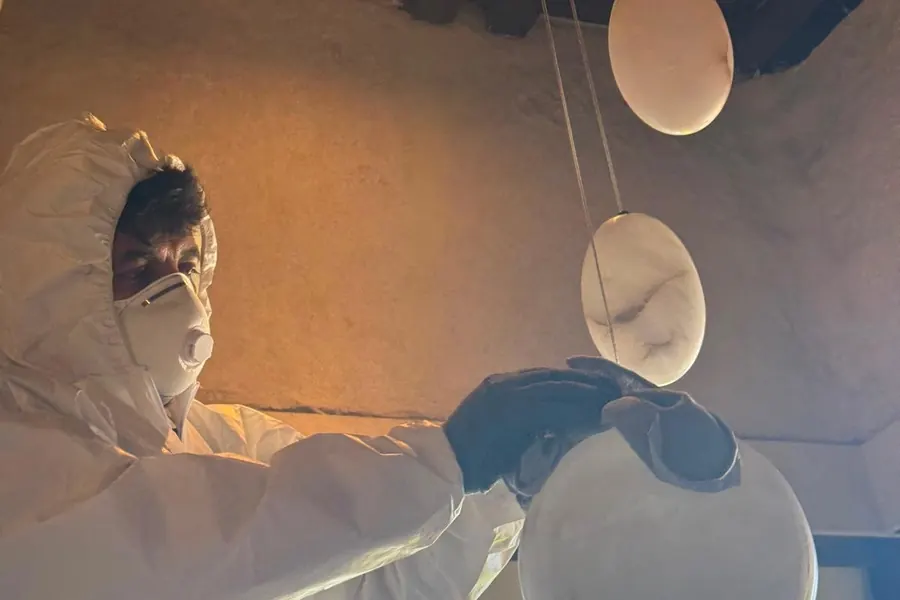 AI job photo
Sample scenario · Las Vegas Valley
A fire next door left smoke in a shared-wall condo. We cleaned walls and ceilings, sealed the attic side and ran air scrubbers.
Frequently asked questions
Yes, with the right process. That means removing materials too saturated to save, cleaning every hard surface, deep-cleaning the ductwork, running air scrubbers, treating with thermal fogging, ozone or hydroxyl, and sealing stubborn wood or drywall.
Yes. The smell means soot particles and chemical residue from burned plastics, fabrics and building materials are still in the air and on surfaces. They can irritate eyes, nose, throat and lungs, especially for children, older adults and people with asthma.
No. Depending on the fire, soot is greasy or acidic, and household cleaners can push it deeper into drywall and wood grain, setting the stain and odor. Disturbing it without air filtration also puts particles into the air you breathe.
Very. A thermal fogger turns deodorizer into a fine mist that behaves like smoke, following the same path into cracks, wall voids, insulation and fibers, where it neutralizes odor molecules instead of covering them.
Ozone gas oxidizes odor-causing compounds everywhere smoke settled. Because it is unsafe to breathe at treatment levels, it is only used when no people, pets or plants are present, and the space is ventilated afterward.
Yes, after any fire. Smoke, soot and ash get pulled into return vents and spread to rooms the fire never reached. We inspect ducts with a camera, clean coils, fans and ducts, and replace filters.
Dry smoke from hot, fast fires leaves fine dust that comes off with HEPA vacuuming and dry sponges. Wet smoke from smoldering fires leaves a sticky film that smears and needs strong degreasers.
Yes, when professionals use them correctly. We choose eco-friendly cleaners where possible and follow IICRC and CARB guidance. Hydroxyl units are safe with people present. Ozone is only used in empty, sealed spaces.
Free inspection. On site in 45 minutes.
Where we work
Local crews in four states, each with its own team, trucks and direct line. Pick your region to find the closest branch.
See all locations or call (800) 719-4808, 24/7
Mold and structural damage can start within 24 to 48 hours of water exposure. Get a free estimate and immediate dispatch.