
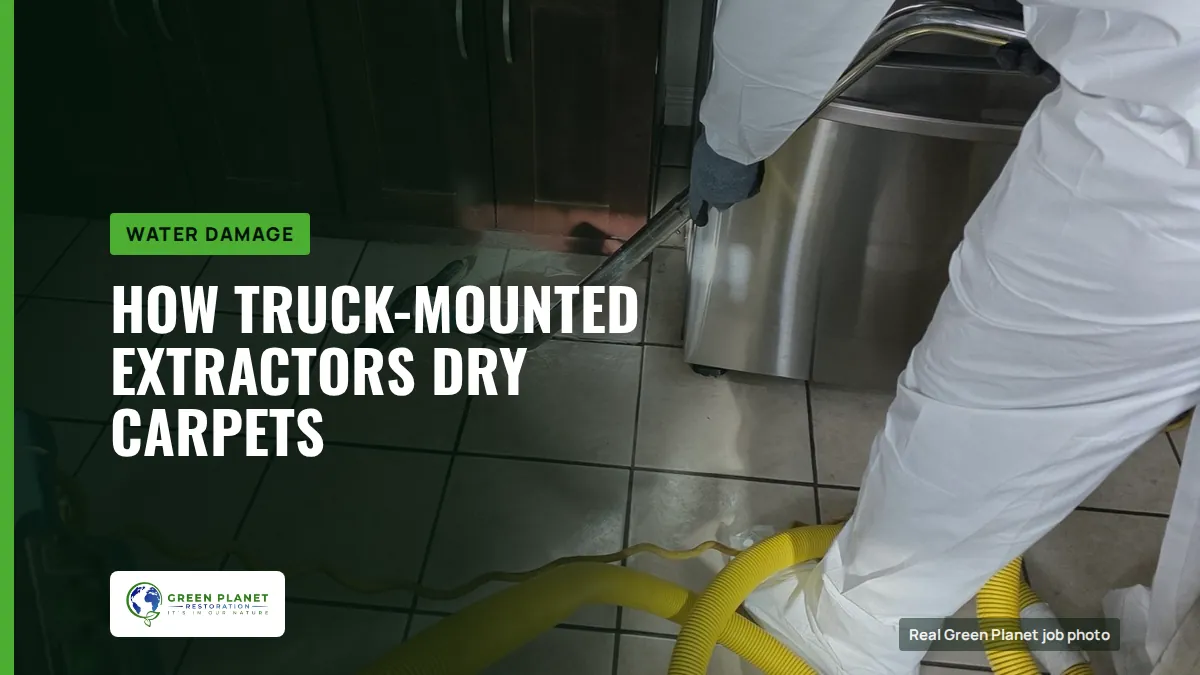
How Truck Mounted Extractors Work
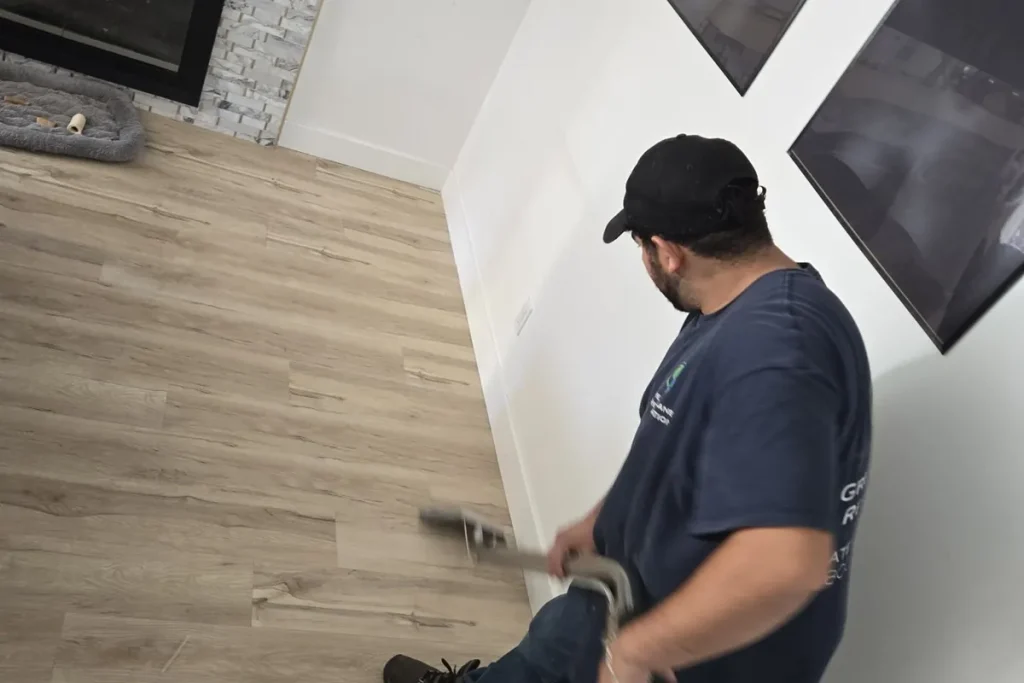
- Hot Water Injection: Water is heated inside the truck to a high temperature and mixed with a cleaning solution. This hot mixture is sprayed deep into the carpet fibers to loosen dirt, contaminants, and bacteria.
- Agitation and Breakdown: The heated solution penetrates the carpet backing, softening residues, breaking up embedded dirt, and lifting grime trapped by water damage.
- High-Powered Suction: A vacuum line then extracts the water, cleaning solution, and debris in one pass. This is where truck mounted extractors outperform portables. The suction power is simply far more, resulting in deeper extraction and faster drying.
- Water Storage: All extracted water is circulated through sealed hoses back to the truck and stored in a waste tank, keeping dirty water out of your home.
- Faster Drying Time: With most of the moisture removed, carpets dry much faster, reducing the risk of mold, mildew, and permanent damage.
When to Use a Truck Mounted Extractor in Seattle

- Basement carpet flooding due to heavy rain or groundwater flooding
- Overflowing appliances like dishwashers or washing machines
- Pipe bursts, which are common during winter freeze-thaw cycles in Seattle, WA.
- Storm-related flooding in older homes with poor drainage
Common Questions About Truck Mounted Carpet Extractors
How Does a Truck Mount Carpet Cleaner Work?
It draws water from a clean tank, heats it, mixes it with a detergent, sprays it onto the carpet, and then immediately extracts the water and grime using vacuum suction. The dirty water is stored in a separate tank in the truck.What Is the Difference Between a Steam Cleaner and a Carpet Extractor?
Steam cleaners use vapor and less water, primarily for sanitizing. Carpet extractors – especially truck mounted units – use hot water and high-pressure suction to clean and remove water from carpets, making them more suitable for water damage recovery.How Long Does a Truck Mounted Carpet Extractor Last?
With regular maintenance, an industrial-grade truck mounted extractor can last 10 to 15 years. The longevity depends on usage frequency, water hardness, and whether filters and tanks are cleaned regularly.Pro Tip for Seattle Homeowners
Rain isn’t your only concern – Seattle’s older plumbing systems are equal culprits in residential flooding. If you live in a house built before 1970, schedule annual inspections for pipe wear and tear. Consider a basement sump pump installation. These preventative steps reduce your risk of needing major water extraction in the future.Water-Soaked Carpet? Here’s Your Next Step
Truck mounted extractors are not only fast – they are precise. If your carpet’s been saturated, don’t wait for mold to take hold. Immediate professional intervention can save the flooring and prevent long-term damage to your subfloor or walls. Read Seattle’s water damage restoration process to understand what steps follow extraction. If you are already dealing with soaked carpets, contact Seattle water damage restoration experts now. Water doesn’t wait. Neither should you. Protect your home and your health. ___________________Related Posts
Complete Guide to Crawl Space Maintenance and Cleanup Effective Thermal Fogging for Odor Removal 8 Common Causes of Household Water Leaks and Water Damage How LGR Dehumidifiers Prevent Secondary Damage How Moisture Meters Prevent Mold Growth Leaking Ice Makers: Why They Happen and How to Prevent Them News: It’s Raining in Los Angeles! Protect Your Roof with Emergency Roof Tarping Help from Green Planet Restoration of LA!Property damage right now?
We find the damage, dry or clean the structure and repair it. On site in about 45 minutes, 24/7.

Written by the Green Planet Restoration team
Our articles are written and reviewed by the crews who handle water, fire and mold damage every day across Southern California, Seattle, Miami-Dade and Las Vegas. About us